


3 min read
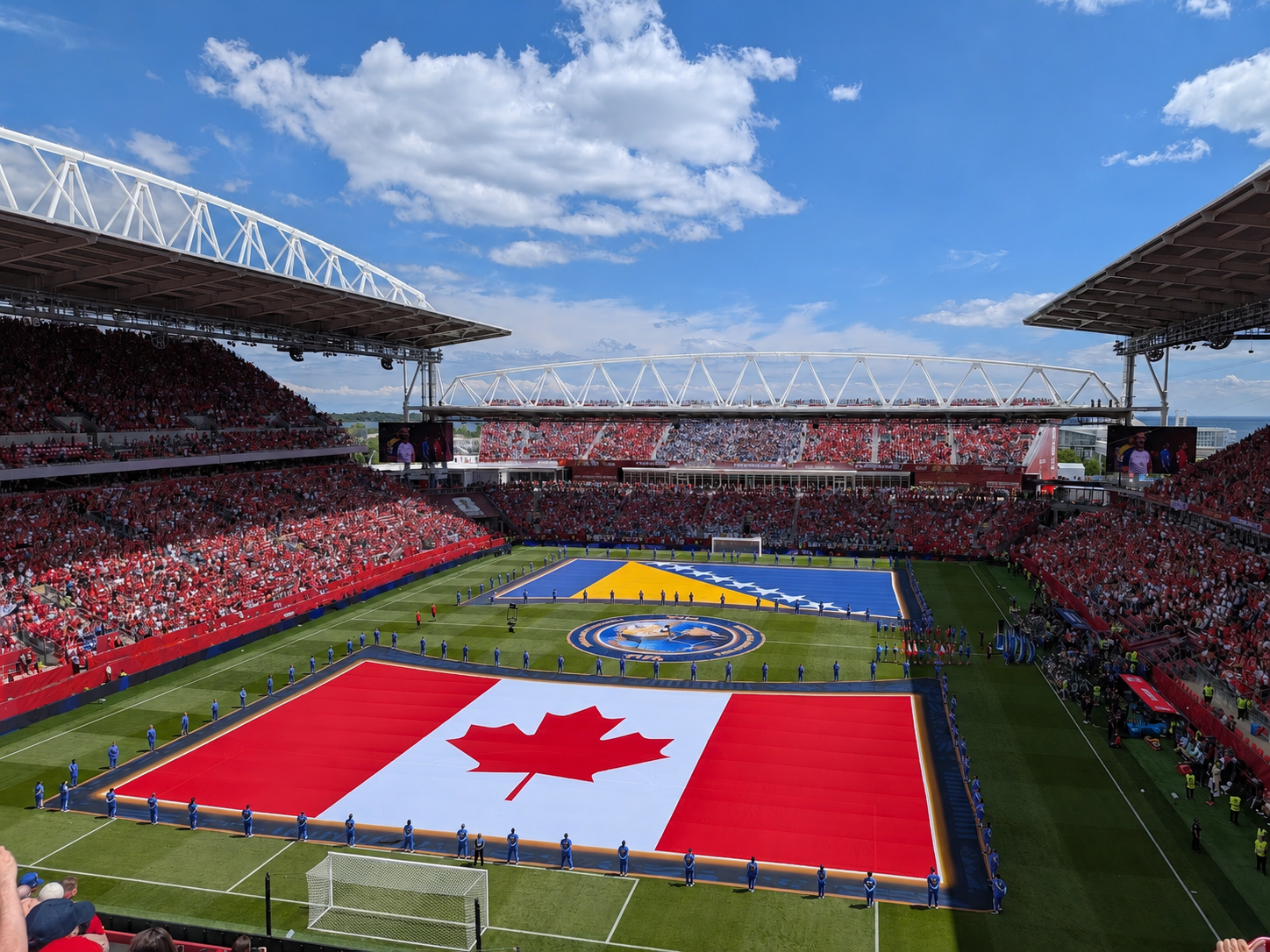
When Canadians watched top-level soccer matches in Toronto and Vancouver this summer, the focus was on the players, the crowd, and the moment. But beneath every pass, shot, and goal was one of the most carefully engineered parts of the tournament: the turf.
For elite international soccer, grass is not just grass. The playing surface has to be safe, consistent, durable, and predictable from one stadium to the next. The sport's governing bodies rely on standardized testing and reporting so competition organizers can compare pitch quality using the same criteria, with player safety and performance at the center of the process.
How BMO Field's Hybrid Turf Worked
At BMO Field in Toronto, the challenge was uniquely Canadian. The stadium is home to Toronto FC and the Toronto Argonauts, while also hosting major events and concerts, so the field had to withstand soccer, football, and heavy event traffic. BMO Field's surface for this summer's matches was a hybrid pitch: about 95% natural grass with 5% synthetic fibers stitched into the profile to reduce divots and improve stability. Ball roll and ball bounce were also tested to ensure the surface performed to elite competition standards.
BMO Field's Turf at a Glance
- Surface type: Hybrid pitch — 95% natural grass, 5% synthetic fibers
- System: SIS Grass Hybrid Shallow Stitch, installed 2025
- Stitch depth: 80 mm
- Maintenance: Grooming, verticutting, fraze mowing, solid tine aeration, precision hand mowing
BMO Field continued upgrading its playing surface in the lead-up to the tournament. SIS Pitches reports that the stadium installed a next-generation SIS Grass Hybrid Shallow Stitch system in 2025, stitched to a depth of 80 mm. The system was designed for Toronto's packed calendar, allowing the surface to be removed or refreshed around major events while maintaining a stable, elite playing field. The maintenance program included grooming, verticutting, modified fraze mowing, solid tine aeration, and precision hand mowing.
BC Place's Temporary Grass System, Explained
At BC Place in Vancouver, the turf story was even more dramatic. BC Place normally uses artificial turf over a concrete base, but for this summer's matches, tournament rules required natural grass, which can be reinforced with synthetic fibres. That meant Vancouver needed a temporary natural-grass system engineered for an indoor stadium environment.
The solution came from Bos Sod Farms in Abbotsford, B.C. Canadian Geographic reports that the turf was grown on sand to match the required shallow pitch profile, monitored for moisture three times per day, and fed nutrients every seven to 10 days. It was harvested into giant rolls, shipped in climate-controlled trailers at about 2°C, and installed at BC Place between May 7 and 9, 2026. The stadium also built up the field by about 35 centimetres to make room for temporary irrigation and vacuum ventilation beneath the surface.
Together, BMO Field and BC Place showed that Canada's pitches for this summer's tournament were not simply fields — they were high-performance sports surfaces built through turf science, local expertise, and daily precision management. The goal was for fans not to notice the grass at all, because when the pitch performed perfectly, the game became the story.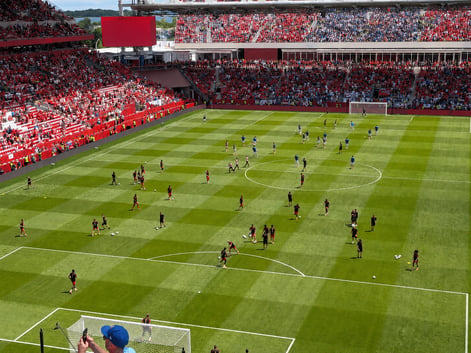
Frequently Asked Questions
Was BMO Field's pitch natural or artificial grass? It was a hybrid system — about 95% natural grass reinforced with 5% synthetic fibers stitched into the profile. This gave the durability of turf with the ball roll and bounce characteristics required for elite competition.
Why did BC Place need temporary natural grass for this summer's matches? BC Place normally plays on artificial turf over a concrete base, but tournament requirements called for natural grass (which can include synthetic reinforcement). Since the stadium isn't built to grow grass indoors year-round, a temporary natural-grass system had to be engineered specifically for the event.
What is a hybrid soccer pitch? A hybrid pitch combines natural grass with a small percentage of synthetic fibers, either stitched into the soil profile or woven through the root zone. This reduces divots, improves surface stability, and helps the turf hold up under heavy use — all while still playing like real grass.
How was the grass for BC Place grown and installed so quickly? The turf was grown off-site at Bos Sod Farms in Abbotsford, B.C., on a sand base matching the required shallow pitch profile. It was monitored for moisture multiple times daily, fed nutrients regularly, harvested in large rolls, and transported in climate-controlled trailers before being installed at BC Place over a three-day window in May 2026.
What do these elite turf systems have in common with home lawn care? The same core principles — soil health, consistent moisture management, aeration, and mowing precision — that kept these pitches performing at an elite level also apply at a smaller scale to healthy home lawns. It's turf science either way, just a different playing field.
Related Posts
Kentucky Bluegrass a distant second to the Ancient Wonder of the World!
As I highlighted earlier, while I was travelling in Italy this month well maintained turf was very...
Winterize Your Lawn!
As the days grow shorter and temperatures begin to drop, it's time to start thinking about...
What's Going On With Your Lawn During Winter?
It's no secret that winter isn't exactly a banner season for lawn care in Canada. With freezing...