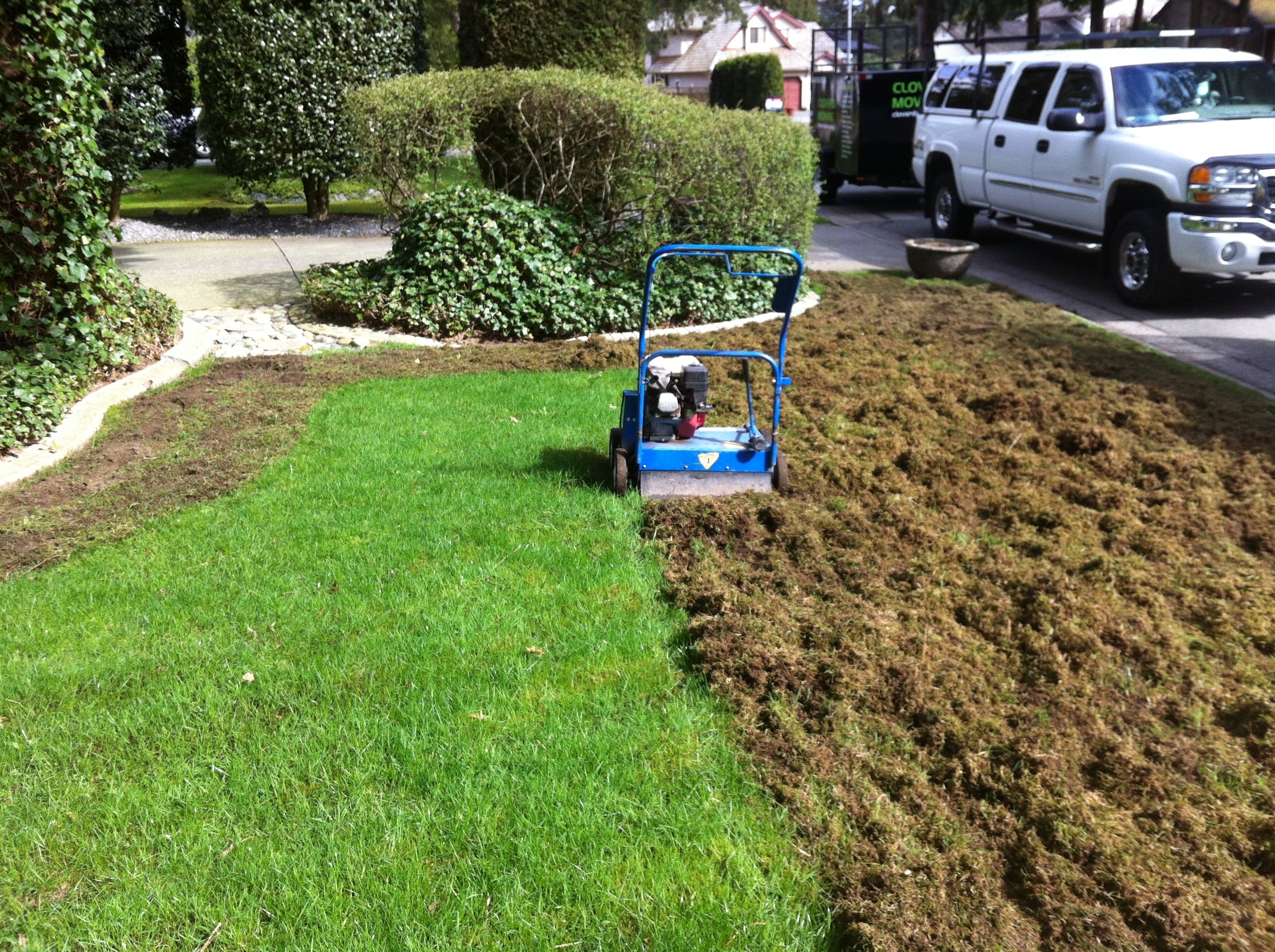
If you’re asking when to power rake lawn, the sweet spot is early spring—after the ground has thawed, and the lawn is dry enough to work, before vigorous new growth begins. At this stage, our technicians set professional equipment, so fixed-knife blades lightly skim the turf's surface. That gentle action lifts winter debris and a small amount of thatch without tearing healthy grass, setting your lawn up for a strong start to the season.
Ready for a visibly cleaner, thicker lawn? Request your Power Raking quote now and get you on the schedule.
Why choose pro power raking (not DIY)
Power Raking is all about calibration. The benefit comes from precision blade height and even coverage—too low, and you risk damage, too high, and you miss the impact. Nutri-Lawn technicians match settings to your grass type and site conditions, protecting density while improving airflow and water penetration. You’ll see faster recovery, cleaner appearance, and a lawn that responds better to fertilizer and irrigation—all without the guesswork.
Skip the DIY trial-and-error—let Nutri-Lawn pros handle your Power Raking with calibrated equipment, precise depth settings, and full cleanup for a smooth, fast refresh. Request a Quote or call us at – 1-888-688-7452
Seasonal cues we watch for
- Soil thawed, turf dry: Working on wet ground can cause ruts and stress.
- Minimal new growth: Early timing avoids cutting fresh blades.
- Winter debris present: Removing matted grass and crust opens the canopy for spring growth.
In some regions, a light late-summer pass may be recommended when paired with seeding, but early spring remains the go-to for most properties.
Don’t guess the right timing—or try to squeeze it in yourself. Nutri-Lawn books Power Raking in the optimal weather window and on a date that fits your calendar—Contact us today.
Add-on services that amplify results
- Overseeding or Seed and Feed: Power raking opens the surface, so new seeds have better soil contact and establishment—ideal right after a spring rake or during late-summer seeding windows.
- Core or Liquid Aeration: Relieves compaction and brings soil microbes to the thatch layer, helping it break down naturally over time.
- Topdressing (where available) or Organic Compost: A thin layer of organic material helps seedlings settle, even minor low spots, and supports recovery.
These services thicken the lawn, improve colour and resilience, and help it handle summer heat and foot traffic.
What about dethatching?
Dethatching is deeper and disruptive, reserved for lawns with extremely thick thatch. Most properties benefit more from our gentler Power Raking, combined with aeration and seeding to manage thatch and promote new growth—without the extensive downtime.
Ready for a clean, healthy spring start? Contact us or Request a Quote online and let's discuss your Power Raking Services