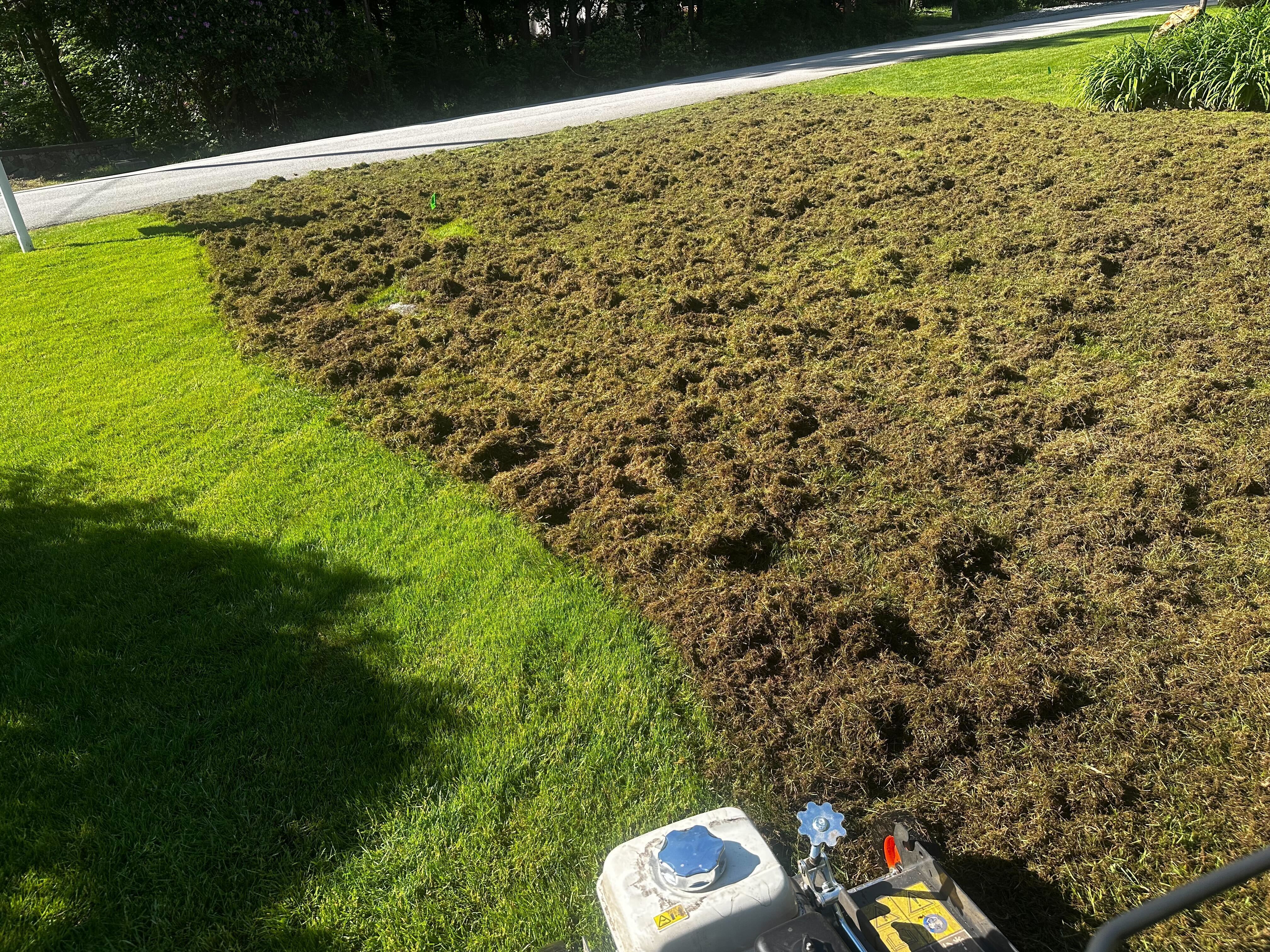
If you’ve been eyeing that layer of “spongy” turf and asking yourself when to power rake lawn, timing is everything. Power raking can jump-start recovery by thinning excess thatch—but only when grass is actively growing and ready to heal.
What is power raking (and what does it fix)?
Power raking (also called dethatching) uses flail or spring tines to lift and remove a built-up thatch layer so water, air, and nutrients can reach the soil. It’s helpful when thatch exceeds about 1.3 cm (½"), or the lawn feels bouncy, scalps easily, or sheds water.
Best time to power rake in Canada
- Primary window: early spring—after the lawn begins greening up and soil has dried from winter (not soggy), so turf can rebound quickly.
- Second window: early fall—temps are cooling, roots are active, and follow-up overseeding takes well.
Avoid peak summer heat, saturated soil, drought dormancy, or just before a hard frost—recovery will be slow and stress high.
Not sure if your timing is right? Request a free quote today and leave the timing with the professionals.
Is Power Raking the right option?
Before you do it yourself or book, it’s worth confirming your lawn needs Power raking—because when thatch is light it can be more disruptive than helpful.
Call 1-888-688-7452 to check if Power Raking is the best fit for your lawn.
In many cases, you’ll get better, cleaner results with a Nutri-Lawn plan that focuses on building density: Core Aeration to relieve compaction, Liquid Aeration to condition the soil with no surface disruption, and Overseeding to fill thin areas fast.
Want the best result with the least stress on your turf? Request an estimate or call 1-888-688-7452 and ask our professionals whether power raking or aeration is the smarter choice for your lawn.
When not to Power Rake
Skip power raking on newly seeded or newly sodded lawns, drought-stressed turf, or on warm days when the soil is soft and tearing is more likely. In those cases, we typically recommend core or liquid aeration (scheduled separately) paired with targeted overseeding—so you open the lawn safely, improve root growth, and build density without risking scalp damage.
If you want many of the same “reset” benefits without the harshness, Liquid Aeration is a great alternative. It helps naturally create channels for air, water, and nutrients to reach the root zone without surface disruption, and when you pair it with Overseeding, you thicken weak areas and improve turf resilience—helping your lawn outcompete stress and gradually reduce thatch over time.
Want a gentler route to thicker turf? Book in a Liquid Aeration with Nutri-Lawn, call 1-888-688-7452.
Conclusion
Power raking can be a great reset, when it’s done at the right time and for the right reason. Aim for early spring or early fall, when turf is actively growing and able to bounce back, and only proceed if thatch actually warrants it. Because power rakers can be aggressive, the wrong depth or too many passes can scalp crowns and open the door for weeds.
That’s where Nutri-Lawn makes it easy: our technicians set the correct depth, pace, and pattern for your grass type and thatch level, then can pair the service with Overseeding and nutrition to speed up recovery and deliver visible results. And if power raking isn’t the best fit, we’ll recommend a smarter alternative—like Core or Liquid Aeration (scheduled separately), to build a stronger, thicker lawn with fewer weak spots.
Save your weekend (and your lawn’s crowns)—get a Nutri-Lawn quote, and watch for seasonal promos with prepay and save.